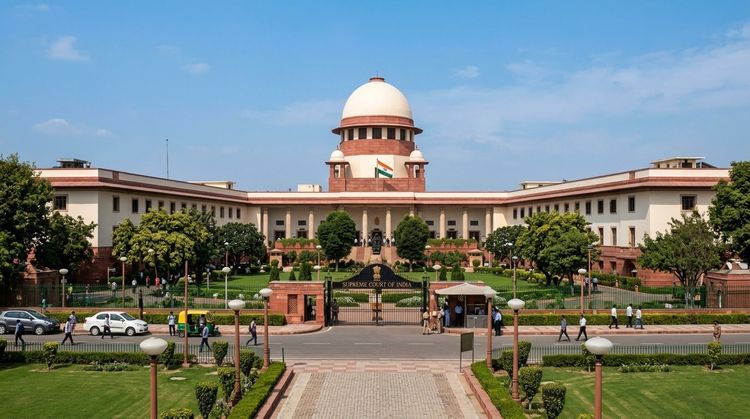
Supreme Court freezes CMRL-Exalogic probe for 10 days
The Supreme Court's order extends the freeze on investigation into the CMRL-Exalogic FIRs to 10 days, revising its October 21 oral order of seven days.
by Trends DeskOctober 23, 20263 min read
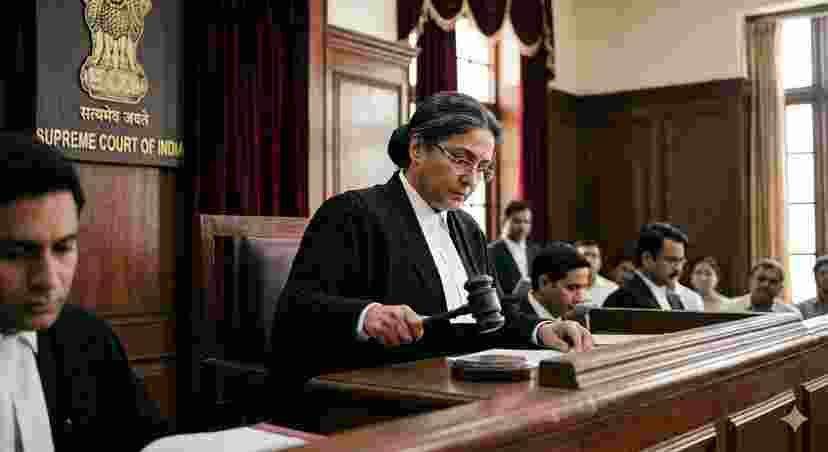
The Supreme Court has extended the investigation freeze in the CMRL-Exalogic payoff case to 10 days in its published order, revising the seven-day stay it pronounced orally in open court on October 21. The freeze covers the investigation into the FIRs against former Keralam Chief Minister and current Leader of the Opposition Pinarayi Vijayan, his daughter T. Veena and his son-in-law and former minister P.A. Mohamed Riyas. The order was published a day after the oral pronouncement, on October 22. The case will now return to the Kerala High Court Division Bench for adjudication of the appeals.
The Supreme Court's published order states: "We direct that the investigation in the impugned FIRs shall remain stayed for a period of ten days from today, which, however, shall not be treated as a conclusive opinion expressed on interim relief, and the Division Bench [of the Kerala High Court] shall be entitled to fashion independently such relief in accordance with law."
The difference between the oral pronouncement and the published order is narrow but consequential: seven days became ten, measured from the date of the order. The published order is the binding record; the oral statement in open court on October 21 had put the stay at a week. The court's oral remarks on October 21 had fixed the period at seven days.
Allowing Vijayan and his co-petitioners to pursue their appeal, the Supreme Court set aside the October 15 order of the Division Bench that had refused them leave to appeal the October 9 single-judge order directing the registration of FIRs under the Prevention of Corruption Act. The court directed the Division Bench to hear the appeals, noting that its observations were limited to the locus of the appellants to prefer the appeal and were not an expression of opinion on the merits.
The FIRs were directed by a Kerala High Court single-judge bench on October 9 under the Prevention of Corruption Act. Pinarayi Vijayan and the two other petitioners, represented variously by senior advocates Siddharth Luthra, N. Hariharan and Krishna Dev Jagarlamudi, submitted that they had been neither made parties nor heard by the single-judge bench before the registration of the FIRs was ordered. The Supreme Court's order allows the three petitioners to pursue their appeals against that directive.
Why the Supreme Court intervened
A special Supreme Court bench of Justices Joymalya Bagchi and V. Mohana convened in the middle of the Dussehra vacations on Wednesday to hear the 82-year-old Vijayan, who voiced fears of imminent arrest, along with his two family members. The bench convened when the court is ordinarily closed. The petitioners had moved the court during the Dussehra break, citing the risk of imminent arrest. Justice Bagchi reminded the state that no matter how low or high a person was, he was subject to the rule of law and principles of natural justice. "We will not disturb the FIR, but we will stall the investigation... Further, we are sending this case back to the High Court for adjudication," Justice Bagchi observed.
What the Supreme Court's 10-day freeze means
The investigation freeze means the probe into the CMRL-Exalogic FIRs stays paused for ten days from the date of the published order, three days longer than the oral pronouncement indicated. The Supreme Court made clear the stay is not a conclusive opinion on interim relief, leaving the Division Bench free to fashion its own relief in accordance with law when it hears the appeals. The Supreme Court's 10-day window gives the Division Bench time to take up the appeals. For the petitioners, the order means the investigation cannot proceed until the Division Bench hears the appeals. The freeze applies to the investigation alone; the FIRs themselves remain on record.