Supreme Court Declares Menstrual Hygiene a Fundamental Right, Warns States
The Supreme Court declared menstrual hygiene a fundamental right and warned states of contempt proceedings over non-compliance.
by Trends DeskOctober 16, 20263 min read
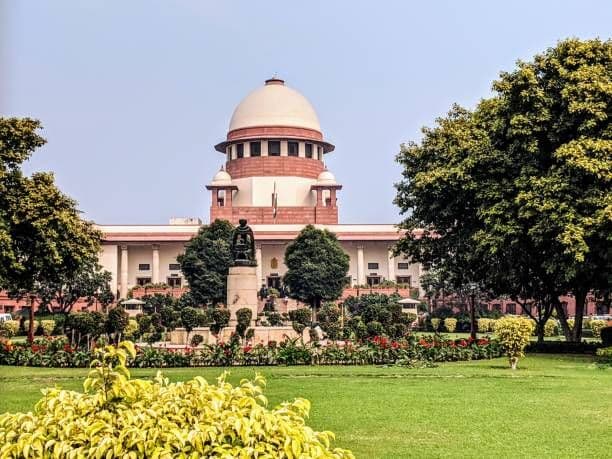
Menstrual hygiene is a fundamental right, the Supreme Court of India declared in a landmark ruling, warning state governments of contempt proceedings over non-compliance with its directives. The court's unequivocal pronouncement elevates the issue from a policy aspiration to a constitutionally protected guarantee, with far-reaching implications for millions of women and girls. In stern remarks, the bench sought detailed reports from states on how they are implementing its earlier orders — and made clear that foot-dragging would invite the court's wrath.
The Supreme Court Menstrual Hygiene Ruling
The Supreme Court menstrual hygiene ruling builds on the court's earlier directions mandating free sanitary napkins in schools and public institutions. The bench noted with concern that several states had failed to file compliance affidavits or had implemented the directives only on paper. By anchoring the issue to the fundamental right to life and dignity under Article 21, the court has given it the strongest legal footing yet. The court's reasoning links menstrual hygiene directly to dignity and equality, noting that inadequate facilities effectively deny girls their right to education. The bench also directed the Centre to coordinate with states on uniform standards. Legal experts say the judgment could open the door to public interest litigation wherever implementation falters.
Why Menstrual Hygiene Needs Legal Backing in India
The gap between policy and practice has long been the problem. Surveys continue to show that a significant proportion of adolescent girls miss school during menstruation, while access to affordable sanitary products remains patchy in rural areas. Government schemes exist — including subsidised sanitary napkin distribution — but coverage is uneven and monitoring weak. The court's intervention recognises that without enforceable obligations, initiatives for menstrual health India risk remaining well-meaning announcements. Making menstrual hygiene a lived reality rather than a slogan requires budgets, monitoring and accountability. Public health experts say sustained legal pressure could transform menstrual health India outcomes within a few years. A constitutionally grounded right changes the calculus: states can now be hauled up for inaction.
States Face Contempt Over Non-Compliance
The warning of contempt proceedings gives the ruling its teeth. The bench directed states to furnish district-wise data on the implementation of the sanitary napkin scheme, covering schools, anganwadis and public health centres. It also asked states to constitute monitoring committees and publish compliance reports every six months, tightening oversight of the sanitary napkin scheme. Officers found neglecting the directives could face personal penalties, a rarity in such matters. States that fail to comply, the court cautioned, will face contempt action against the responsible officers. The court's monitoring of the matter will thus continue, with the bench retaining seisin of the case. For bureaucrats accustomed to treating court directives as advisory, the message is blunt: this time, non-compliance has consequences.
What the Women Rights India Movement Gains
Beyond the immediate directives, the ruling is a milestone for women rights India advocates who have campaigned for years to destigmatise menstruation. Recognising menstrual hygiene as a fundamental right reframes the conversation from charity to entitlement — from welfare schemes to constitutional guarantees. Activists hope the judgment will spur better budget allocations for menstrual hygiene programmes, stronger monitoring and, crucially, open discussion of a topic still shrouded in taboo. If implemented in spirit, the right could improve school attendance, workplace participation and health outcomes for a generation of Indian women — a lasting legacy for women rights India.
Related articles in Law & Government
View all Law & Government →Browse more stories in Law & Government.


