Supreme Court questions Meta over WhatsApp privacy policy
The Supreme Court made strong observations on the WhatsApp privacy policy and the CCI penalty during the hearing of appeals, with no final judgment reported.
by Trends DeskOctober 26, 20264 min read
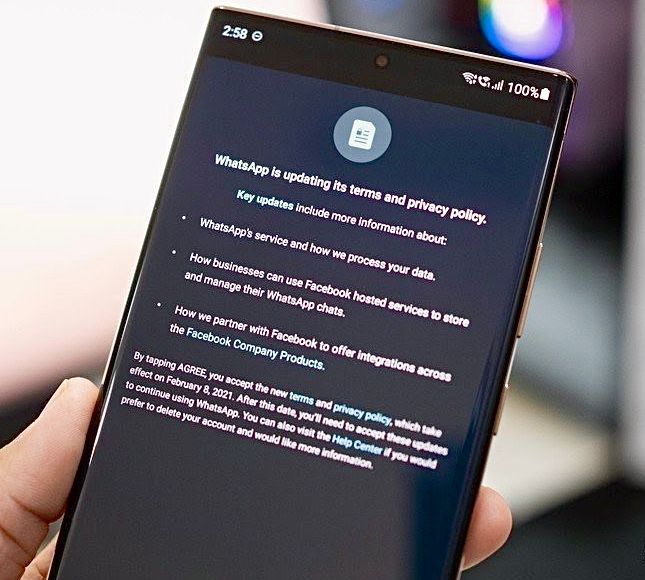
The Supreme Court made strong observations about the WhatsApp privacy policy of 2021 during the hearing of appeals by Meta Platforms Inc. and WhatsApp LLC against a Rs 213.14 crore penalty imposed by the Competition Commission of India (CCI). The observations on the WhatsApp privacy policy, reported by LawStreet, were made during the hearing stage. The WhatsApp privacy policy dispute therefore remains undecided. No final judgment deciding the appeals on their merits was reported. Readers should therefore read the court's remarks as observations in an ongoing case, not as a concluded ruling.
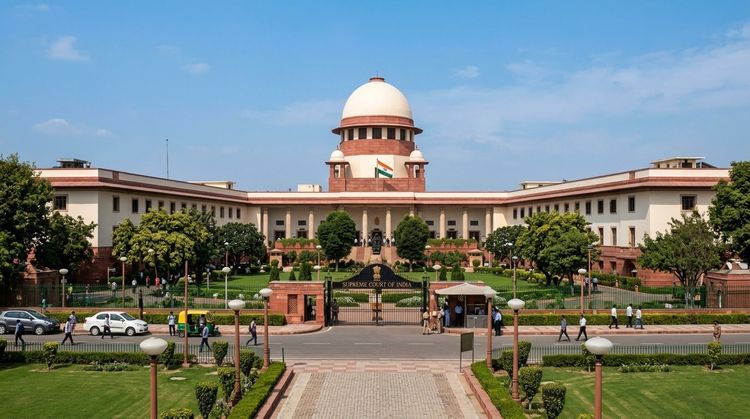
A bench of Chief Justice of India Surya Kant, Justice Joymalya Bagchi and Justice Vipul Pancholi heard the appeals, which challenge a National Company Law Appellate Tribunal (NCLAT) order. The tribunal had upheld the CCI penalty for abuse of dominance and coercive data sharing practices linked to the WhatsApp privacy policy, while easing some of the regulator's directions on data sharing for advertising. The CCI has also filed a cross appeal against that easing. The Supreme Court agreed to admit the appeals, according to earlier reporting of the hearing, and the case remains pending.
What the court said about the WhatsApp privacy policy
LawStreet reported the bench as saying that companies must follow the Constitution or leave India, and that citizens' privacy must not be compromised. The bench described the consent obtained under the WhatsApp privacy policy as manufactured consent, on the ground that users are often forced to accept terms to keep access to an essential communication service. It called the policy a take it or leave it arrangement that leaves consumers with no real choice but to surrender privacy rights. The Chief Justice was also reported as calling the policy a decent way of committing theft of private information and a mockery of constitutionalism.
Those remarks are strong, but they are observations made while hearing arguments. They do not by themselves quash or uphold the penalty, and they do not settle the data sharing questions. The court also questioned how an ordinary user, including a user in a rural area or one who speaks only a regional language, could understand complex terms or learn of any right to opt out. The CCI's counsel told the court that WhatsApp's revenue model relies on user data. WhatsApp's counsel argued that only some data is shared and stressed that messages remain encrypted.
Why the WhatsApp privacy policy case is still open
The dispute began with the CCI's 2024 order, which found that WhatsApp, dominant in India's messaging market, tied continued use to accepting updated data sharing terms with Meta group companies. The NCLAT in November 2025 upheld the Rs 213.14 crore penalty but set aside the CCI's blanket five year ban on sharing WhatsApp user data for advertising, holding that a complete ban would not be justified once users get meaningful opt in and opt out choices. It gave WhatsApp three months to put the revised framework in place. Both sides then appealed to the Supreme Court, Meta and WhatsApp against the penalty, and the CCI against the easing of the advertising ban.
That history explains why the Supreme Court's observations matter without deciding the case. The CCI penalty is the amount at stake in the companies' appeal, and the CCI penalty will stand or fall only when the court rules on the merits. The bench is weighing whether consent under the WhatsApp privacy policy was real, whether data use by Meta companies was coercive, and what safeguards should apply while the appeals are pending. Earlier reporting said the bench refused to permit sharing of information without safeguards and sought affidavits clarifying data practices, while impleading the Ministry of Electronics and Information Technology. Those steps are case management directions, not a final verdict.
Until the court delivers a judgment, the NCLAT order and the penalty stand as the operative appellate decision, subject to whatever interim directions the Supreme Court gives. The companies, the regulator and users will have to wait for the court's reasoned decision to know whether the penalty survives, whether data sharing terms must change, and on what conditions advertising use of data may continue. The WhatsApp privacy policy will stay under scrutiny until that ruling arrives.