Supreme Court: trafficking is not voluntary sex work
The Supreme Court wants a uniform protocol to help magistrates separate human trafficking victims from adults engaged in voluntary sex work.
by Trends DeskOctober 23, 20264 min read
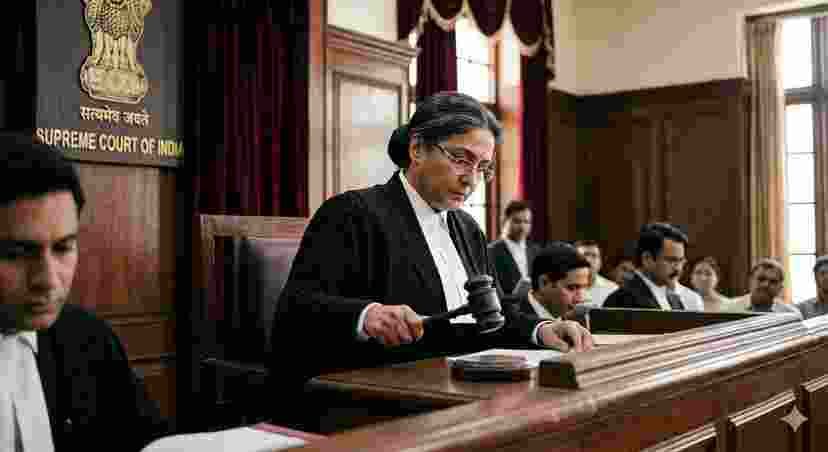
The Supreme Court has asked the National Judicial Academy to frame a uniform protocol for magistrates so adult women in voluntary sex work are not put through the process meant for trafficking victims. A bench of Justices J.B. Pardiwala and R. Mahadevan said every magistrate must conduct a mandatory "threshold inquiry" into the circumstances of each adult woman rescued during an anti-trafficking operation, even when she says her work is voluntary.
The exercise separates genuine trafficking victims who need protection from adult sex workers who should not face intrusive proceedings or forced rehabilitation only because they were found in a raid. The Supreme Court noted that traffickers may tutor or intimidate victims into claiming their work is voluntary so they return to the trafficker's control. Magistrates must assess the full circumstances rather than treat a statement of consent as the end of the matter.
The directions build on a May 29 judgment in a 2004 public interest litigation filed by the NGO Prajwala. In that judgment, the Supreme Court held that the Immoral Traffic Prevention Act must not be used to subject adult voluntary sex workers to the rescue, custody and rehabilitation procedures meant for trafficking victims. Prostitution in itself is not an offence, the court said, and voluntary adult sex workers must not be arrested, penalised, harassed or victimised during raids merely because they are found in a brothel.
Citing the Law Commission's 64th report and the 2022 Budhadev Karmaskar ruling, the bench held that the legal framework was never meant to interfere with adults who take up sex work of their own choice. Sections 15, 16 and 17 of the Immoral Traffic Prevention Act could otherwise sweep together trafficked women and women who chose the work themselves, the May judgment said, and a preliminary judicial determination is needed before any deeper inquiry into her age, character, antecedents and family circumstances.
What the Supreme Court ordered
Under the framework laid down by the Supreme Court, a magistrate must examine the rescued woman's consent and wishes, her own account of the work, the social worker's assessment, possible threats, coercion, force or undue influence, and any safety concerns if she is released. Consent must be the primary consideration in decisions on long-term custody in a protective home or restoration to her family. A magistrate may depart from her expressed wishes only in exceptional circumstances, such as a risk to her safety or a finding that her consent was produced by coercion, tutoring or undue influence, and must record the reasons in writing.
Rehabilitation cannot be imposed against a victim's will as a routine step. The state must provide the support and means for rehabilitation while respecting the person's choices, dignity and circumstances. The National Judicial Academy will now prepare guidelines for magistrates conducting the threshold inquiry, with Prajwala's assistance in framing the protocol. The directions apply to adult victims of trafficking for commercial sexual exploitation; child victims are covered by the Juvenile Justice Act, 2015, through child welfare committees.
Why the Supreme Court acted now
The latest order followed a compliance review in which the Supreme Court found that several states and union territories had yet to implement four additional directions from the May judgment. Senior advocate Aparna Bhat, appearing for Prajwala, submitted a compliance table setting out stakeholder responsibilities. Additional Solicitor General Aishwarya Bhati presented the Centre's status note. The bench voiced concern that judicial directions often risk remaining on paper, with no reliable way of assessing their impact on the ground. "Once these directions are committed to the paper in the form of a judgment, the matter marks its abrupt end," the bench observed.
The Supreme Court has asked the Union government to obtain detailed compliance reports from all stakeholders, and to ensure both the petitioner and the Centre suggest concrete ways to track progress. A fresh status report is due by the next hearing on December 14, when Prajwala will also report on the National Judicial Academy's protocol.
Anti-Human Trafficking Units to get police station status
The Supreme Court also directed state and union territory governments to notify Anti-Human Trafficking Units as police stations in accordance with law, and asked the Centre to pursue it with all states. The court said the step would give the units a clear legal framework instead of leaving gaps in their formal status. Prajwala's original plea had sought a dedicated agency to tackle cyber-enabled trafficking, alongside a victim-oriented approach under the Immoral Traffic Prevention Act.