Supreme Court to hear Vande Mataram transfer plea on 27 Oct
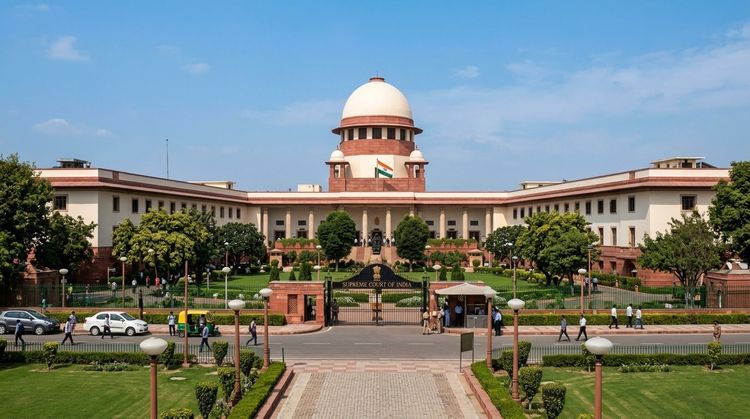
The Supreme Court is likely to hear on 27 October a plea to transfer a Delhi High Court case seeking equal status for Vande Mataram and the national anthem.
by Trends DeskOctober 25, 20263 min read

The Supreme Court is likely to hear on 27 October a petition seeking the transfer of a Delhi High Court case concerning equal status for the national song Vande Mataram and the national anthem Jana Gana Mana. According to the Supreme Court website, a bench of Chief Justice Surya Kant and Justices Joymalya Bagchi and V Mohana is likely to take up the transfer petition. The hearing date does not mean the court has accepted the demand for equal status or issued any final directions.
The transfer petition has been filed by advocate Ashwini Upadhyay. The transfer application has been filed through advocate Ashwani Dubey. The petitioner seeks to move the public interest litigation pending before the Delhi High Court to the Supreme Court, on the ground that a similar petition is already pending before the apex court. Transferring the matter would allow related issues to be considered by the same court, the petitioner argues.
The underlying litigation seeks directions to the Central government and the Delhi government to ensure that both songs are played and sung in schools and other educational institutions on every working day. It also calls for a national policy with guidelines for honouring and promoting the song. The petitioner argues that the absence of specific regulations has led to Vande Mataram being performed in an inappropriate manner, and being used in films and at parties without adequate regard for its significance.
What the Vande Mataram plea seeks
The petition further seeks restrictions on the dramatisation of the song and its inclusion in variety shows. It maintains that everyone present should show appropriate respect whenever the song is performed or played. The petitioner has argued that Vande Mataram represents the history of India, its sovereignty, unity, national identity, and pride, and that it played a part in the freedom struggle.
The plea states that Vande Mataram should be honoured equally with Jana Gana Mana, in line with the statement made by Constituent Assembly chairman Rajendra Prasad on 24 January 1950 with regard to the national anthem. The petitioner contends that any act of disrespect towards the song would be socially unacceptable, and that citizens should both refrain from such acts and try to prevent them by others.
The petition, filed by Ashwini Upadhyay, also notes that Vande Mataram was written by Bankim Chandra Chatterjee and that Jana Gana Mana was written by Rabindranath Tagore. It says the national song was first sung in a political context by Tagore at the 1896 session of the Indian National Congress, and that it served as a motto for independence during the freedom movement. Those historical claims form part of the petition, and the court has not yet ruled on them.
Transfer question in the Vande Mataram case
The immediate question before the Supreme Court on 27 October is one of transfer, rather than a final decision on the status of the song. The court will consider whether the Delhi High Court case should move to the Supreme Court because a similar writ petition is pending there. The bench listed for the matter is led by Chief Justice Surya Kant, with Justices Joymalya Bagchi and V Mohana.
If the court allows the transfer, the litigation would be heard with the pending Supreme Court matter. If it does not, the case would continue before that court. Either way, the prayers in the underlying petition, including daily singing in educational institutions and a national policy on the national song, remain to be decided. The Supreme Court listing for 27 October is the next step in that process, and no order on the merits has been reported.