AI Cancer Selfie Prediction May Aid Cancer Care
A study in Lancet Digital Health says an AI model can estimate a cancer patient's risk of dying from a single facial photo. It is not ready for clinical use.
by Trends DeskOctober 20, 20264 min read
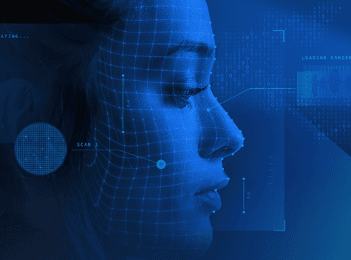
A new study suggests AI cancer selfie prediction could help doctors estimate a cancer patient's survival chances from a single facial photo. Published in Lancet Digital Health on Monday, the research describes an algorithm that scores the risk of dying, with results the authors call surprisingly accurate.
The research was led by Ray Mak, a radiation oncologist at Mass General Brigham Cancer Institute. Mak said the approach builds on how doctors already assess patients. Medical students, he noted, are trained to walk into a room, look at the patient and make an assessment — an impression of how healthy, frail or sick they are. That subjective call can shape treatment choices, from surgery and chemotherapy to radiation and end-of-life care, a judgement the cancer survival AI could make more objective.
How AI cancer selfie prediction was trained
Mak and his colleagues trained the algorithm on 40 million facial images without giving it a specific task, then refined it in two ways: to estimate a person's biological age from a photograph, and to predict the survival odds of cancer patients. Using attention mapping, the team found age estimates drew on the nasolabial folds and forehead, while mortality risk drew on the bridge of the nose and areas below the eyes. Writing in Lancet Digital Health, the researchers say it is unclear why.
The study stresses the model is not perfectly accurate, yet those with the highest risk scores generally faced the highest real risk. In a test group of 3,820 cancer patients, 64 of the 122 patients given the highest risk score — more than half — died within 90 days of the photograph being taken. In a separate group of more than 38,000 cancer patients, those who looked older than their chronological age had a higher risk of dying. The gap between risk scores and actual outcomes was the strongest signal yet that AI cancer selfie prediction can flag high-risk patients.
Combined scores beat single measures
Combining both scores gave the strongest results. "When we put both the face age and face survival scores into a clinical prognostic model, we do better at survival prediction than either one alone," Mak said. The researchers say AI cancer selfie prediction should be viewed as one more data point rather than a verdict.
Everyday variables did not break the model. Smiling or frowning, makeup and lighting had little effect, and the age estimate survived most common plastic surgery. The main exception was rhinoplasty: people were rated slightly older in photos taken after a nose job. Smokers and heavy drinkers looked older than their age, echoing known risks. The team concluded that AI cancer selfie prediction is robust to everyday variation but sensitive to structural changes around the nose.
AI cancer selfie prediction is not clinic-ready yet
Mak hopes the technology could eventually support more objective treatment decisions in hospitals and act as an early warning system when a patient appears to be ageing faster than expected. Mass General Brigham has a patent pending on the face health algorithms. For now, though, the cancer survival model was trained on a Boston-area population that was majority white, and the team is expanding its data to cover a wider diversity of faces. More diverse data will be essential before AI cancer selfie prediction moves toward hospital use. A reliable facial photo prognosis, the authors note, will need testing across many more populations.
AI medical ethics questions around AI cancer selfie prediction
Matthew Liao, director of the Center for Bioethics at New York University, called the paper interesting, saying the tool could help identify people who need extra care. But he warned an error could deny care to someone who needs it, and asked how insurers or employers might use it — to grant or deny coverage, or hire the candidate deemed healthier. "We really need to think through the societal implications of this thing as we develop it further," he said. The episode has reopened debates in AI medical ethics about who gets to use such tools, how fast AI cancer selfie prediction spreads beyond research labs, and what safeguards any cancer survival AI used to guide treatment would need.
Mak said any hospital deployment would need rigorous clinical testing first. "There's still a lot of development ahead," he said. "But we're really excited that we're launching a completely new field in medicine." For patients, the appeal of a facial photo prognosis is its simplicity: no blood draw, no scan, just a photograph.