Euro Crisis Risk: Swiss Minister Warns on EU Debt Levels
Swiss Finance Minister Karin Keller-Sutter warned rising European debt could trigger a euro crisis, citing France's deficits and US sovereign debt risks.
by Trends DeskOctober 17, 20263 min read
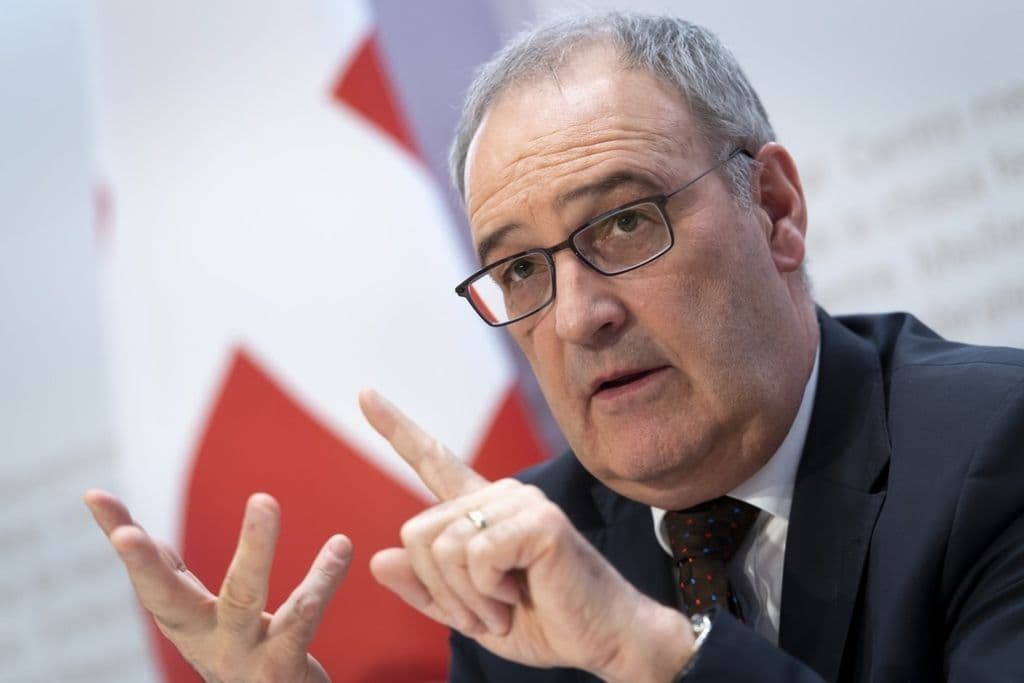
Swiss Finance Minister Karin Keller-Sutter has warned that rising public debt levels in Europe and beyond pose a threat to economic stability and could trigger a euro crisis, in unusually blunt remarks delivered on the sidelines of the annual meetings of the International Monetary Fund and the World Bank in Bangkok. Speaking to Swiss national broadcaster SRF on Friday, Karin Keller-Sutter said energy prices were also fuelling concerns among policymakers, and cautioned that Switzerland's deep integration with the global economy left it exposed to any sovereign debt shock. "We're so deeply interconnected internationally that we're also vulnerable, for instance, in case a debt crisis arises due to the sovereign debt of major countries," she said. "I'm thinking in particular of the United States, but also of Europe; we have France – that could lead to a euro crisis." The comments, reported by Reuters, mark one of the starkest public warnings from a senior European official this year about the risk that fiscal stress in a major economy could spiral into a full-blown euro crisis. ## Swiss Minister Points at France's Finances France's public debt, persistent budget deficits and tepid economic growth have fed growing concern about its finances, with political fragmentation complicating efforts at fiscal consolidation. Keller-Sutter's decision to single out Paris underscores how France debt dynamics have become the focal point of market anxiety in the eurozone. With a rising debt pile, stubborn deficits and sluggish growth, France is increasingly viewed as the weak link whose troubles could spill across the currency bloc. European debt markets have been watching Paris closely as successive governments struggle to rein in spending without derailing growth. The Swiss minister also flagged the United States, noting that American sovereign debt added to the global picture of fiscal strain. Though Switzerland has one of the lowest levels of public debt in Europe, Karin Keller-Sutter said it was important to see the bigger picture in the current environment, arguing that no open economy is immune when a debt crisis erupts in a major country. The interconnectedness of the financial system means that stress in US or French bond markets would quickly transmit across borders. Her euro crisis warning is the most direct intervention yet from a non-eurozone finance minister on the continent's fiscal fault lines. ## What a Euro Crisis Would Mean for Markets A renewed euro crisis would carry echoes of the sovereign debt turmoil that engulfed the eurozone in the early 2010s, when Greece, Ireland, Portugal, Spain and Cyprus required emergency assistance. This time, the epicentre would be far larger: France is the eurozone's second-biggest economy, and a loss of market confidence in Paris would dwarf earlier episodes. For investors, the warning from the Swiss finance minister is a reminder that European debt sustainability remains fragile even as the European Central Bank navigates interest-rate policy. Indian markets, too, watch European debt developments closely, since a spike in global risk aversion typically hits emerging-market equities, currencies and capital flows. ## Energy Costs Add to Euro Crisis Pressures Keller-Sutter also pointed to energy prices as an additional source of concern for policymakers. Elevated energy costs squeeze household budgets, widen trade deficits and complicate central banks' efforts to bring inflation down without choking growth — all of which make fiscal consolidation harder for heavily indebted governments. The France debt overhang means that any energy-driven inflation shock would hit Paris's fiscal arithmetic hardest. With France facing political gridlock and the United States running large deficits of its own, the Swiss finance minister's euro crisis warning lands as a sobering assessment: the buffers that carried Europe through past shocks are thinner today, and the next test of the currency bloc's resilience may not be far away.