Climate Action Plan Ignores Health, India Scores 2 of 32
India scored 2 of 32 on the Healthy NDC Scorecard for integrating health into its climate action plan, ranking joint-bottom with Japan and New Zealand.
by Trends DeskOctober 19, 20263 min read
India has performed poorly in integrating health into its national climate action plan, according to a new global scorecard. The report, titled "Healthy NDC Scorecard" and published by the Global Climate and Health Alliance, assessed how well 132 countries incorporate health considerations into their Nationally Determined Contributions, the national climate action plans submitted under the Paris Agreement. India scored just 2 out of 32, placing it joint-bottom with Japan and New Zealand.
The scorecard assesses eight indicators: health impacts, air pollution, action in the health sector, health co-benefits, a just transition, integrated governance, economics and finance, and monitoring and evaluation. Each carries a maximum score of four. India scored zero on six indicators and just one each for action in the health sector and integrated governance. Colombia topped the rankings with 29 out of a possible 32 points, followed by Nigeria with 25 and Cambodia with 24, while Paraguay and Timor-Leste rounded out the top five with 22 points each.
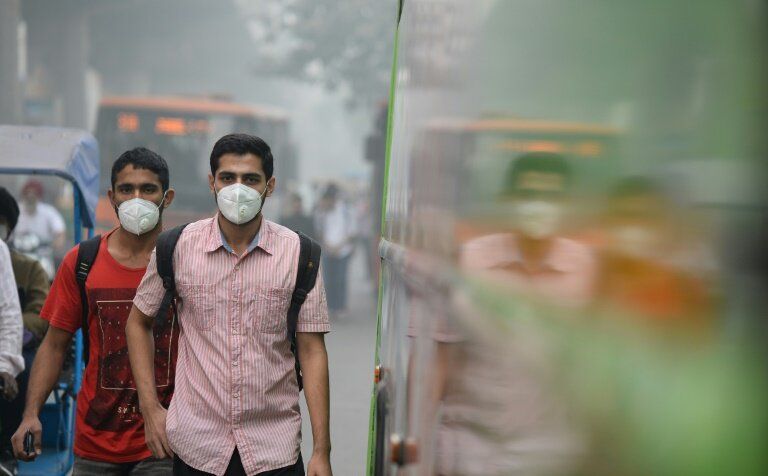
The finding is significant given India's vulnerability to climate-related illness and premature death. The report estimates that India records 186.2 air pollution mortality India deaths per 100,000 people and warns that the country is on course for a rise in global temperatures of more than 2 degrees Celsius above pre-industrial levels. India ranked ninth in the Climate Risk Index 2026, covering the period from 1995 to 2024, an index released around the COP30 climate summit in Belem, Brazil.
The Global Climate and Health Alliance is a consortium of more than 300 health professionals and civil society organisations working at the intersection of climate change and health. This is the third edition of the scorecard, following earlier assessments in 2021 and 2023. The report finds that the emissions-reduction targets in the NDCs of India and Japan are not aligned with the Paris Agreement, putting public health at risk.
Climate Action Plan: India's Poor Scorecard
The numbers behind the climate action plan scorecard are stark. India's latest NDC, submitted in April, makes no mention of air pollution or the health benefits of climate action, even though air pollution claims roughly two million lives annually in India, according to Anumita Roychowdhury of the Centre for Science and Environment. Only five countries, Cambodia, Chile, Colombia, Costa Rica and Paraguay, have set targets to reduce black carbon, a pollutant that contributes to global warming and air pollution. India is particularly affected by air pollution, making the omission in its climate action plan especially significant.
Why the Climate Action Plan Misses Health
Experts say the gap in the climate action plan reflects a policy disconnect between air quality and climate policy. Roychowdhury called it inexplicable that the NDC overlooks both air pollution and potent short-lived climate pollutants such as black carbon, despite India's endorsement of the COP28 Declaration on Climate and Health. Anjal Prakash, a public policy professor at FLAME University in Pune and an IPCC report author, said climate policy cannot be divorced from public health, adding that India's next NDC must include health indicators, assess impacts on vulnerable populations and strengthen health infrastructure resilience as part of climate health policy. Closing the India NDC health gap will require exactly that kind of integrated climate health policy.
Climate Action Plan: The Road Ahead
Health is expected to feature prominently at COP31, scheduled in Antalya, Turkey, in November 2026, where discussions will advance health, equity and resilience in the global climate response. The Healthy NDC Scorecard research lead, Nova Tebbe, said rapid action to curb short-lived climate pollutants offers a triple win of slowing warming, delivering immediate health benefits and generating cost savings. For India, the path forward on its climate action plan is clear: the next NDC must integrate the India NDC health agenda that the current submission almost entirely ignores, or the country's enormous air pollution mortality India burden will continue to sit outside its climate commitments.