South Korea Automakers Divided Over China: Rival or Partner?
South Korea automakers are split over China as reliance on Chinese capital and EV technology divides the industry's response.
by Trends DeskOctober 16, 20263 min read
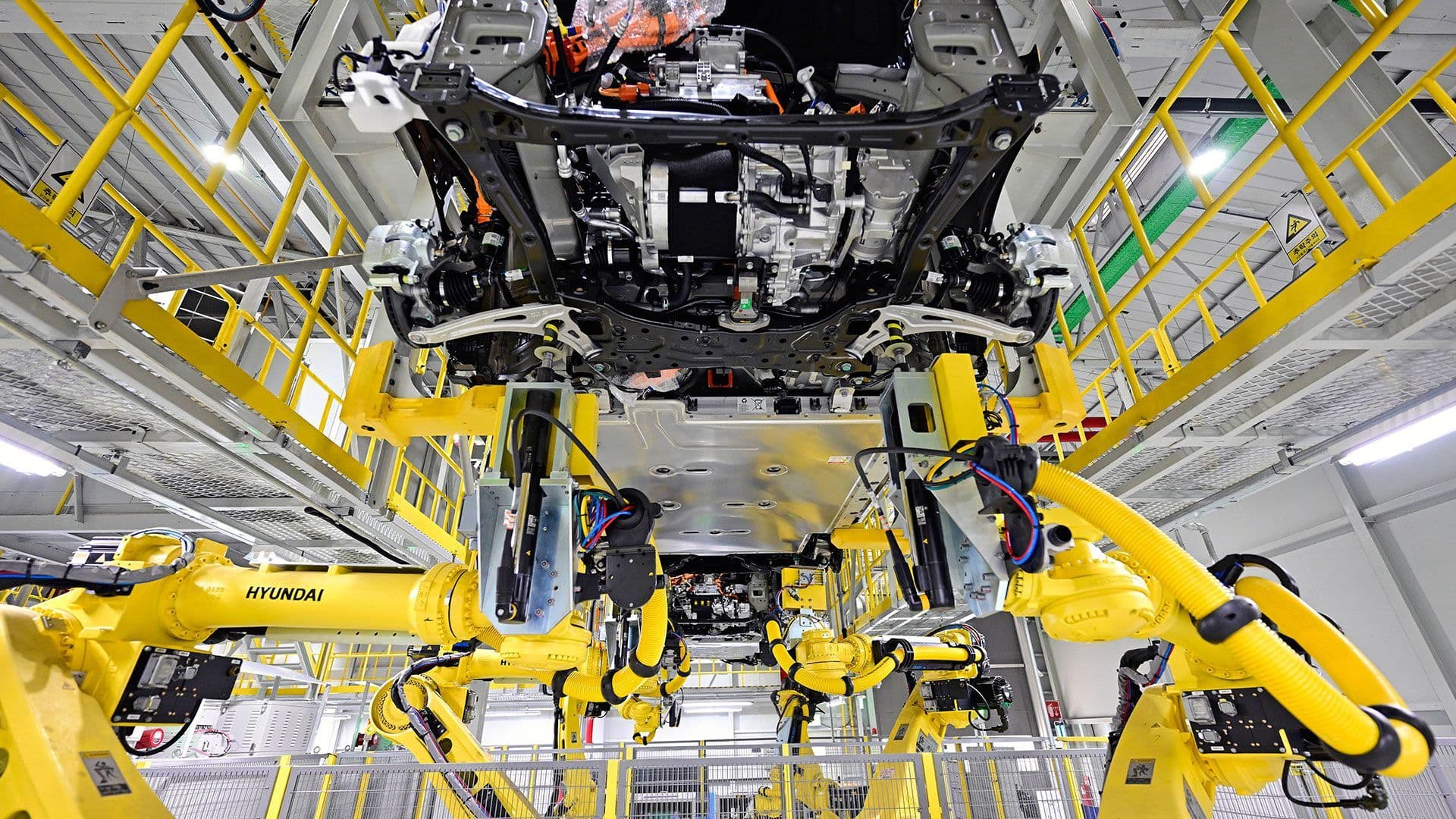
South Korea automakers are struggling to speak with one voice on China, as the country's five carmakers find themselves torn between treating Chinese firms as rivals and relying on them as partners. A new analysis published on October 15, 2026, says Korean carmakers are finding it increasingly difficult to agree on how to respond to the growing threat from Chinese EV makers.
The shift marks a sharp change for the Korea auto industry, long proud of its self-reliance. Hyundai Motor, Kia, KG Mobility, Renault Korea and GM Korea built their global standing by competing head-on with Japanese and Western brands. Now, Chinese investment and technology are reshaping the commercial interests of these five carmakers, and each company faces a very different level of exposure to Beijing.
South Korea Automakers Split Over the Chinese EV Threat
The clearest sign of the divide is money: the KG Mobility Chery partnership, under which China's Chery Automobile — the country's largest passenger vehicle exporter — has agreed to invest $75 million in KG Mobility, gives a Chinese carmaker a direct stake in a Korean brand. Meanwhile, China-made electric vehicles are rapidly expanding their foothold in South Korea through rental and car-sharing fleets, following deals with operators such as Socar.
Dependence runs deeper than finished cars. Chinese suppliers have emerged as the dominant source of key components for South Korea's robotaxi and robotics industries, with Chinese LiDAR technology powering much of the fast-growing physical AI sector. Analysts say South Korea has become the auto market most exposed to Chinese EV makers, partly because it maintains lower tariffs and less generous EV subsidies than rivals that have built defensive barriers.
For Hyundai and Kia, whose Hyundai Kia China strategy must balance rivalry with supply-chain reliance, the answer looks like protection and state support. For carmakers tied into Chinese investment — such as KG Mobility after the KG Mobility Chery deal — confrontation could hurt their own operations. The result is an industry lobby that cannot agree on what to ask Seoul for.
Korea Auto Industry Bets Big at Home and in India
Even as the China debate divides the boardroom, the Korea auto industry continues to invest heavily. Hyundai Motor Group has pledged to invest 125.2 trillion won, about $86.7 billion, in South Korea through 2030, describing the programme as a push to build a global robotics hub alongside its car business.
India is the other big bet. Hyundai Motor Group will invest $15.5 billion in India through 2032, its largest-ever commitment to an emerging market, centred on new capacity in Pune, Maharashtra. The group plans vehicles tailored to Indian buyers and expanded manufacturing, a strategy its leadership describes as a home-brand approach for India.
Back home, the market itself is shifting fast. South Korea's hybrid car market shrank for the first time in the first nine months of 2026, while electric vehicle sales surged 75 percent. Tesla's Model Y is closing in on Kia's Sorento for the title of the country's best-selling car, a sign of how quickly import competition is intensifying.
For Indian readers, the story matters because Hyundai and Kia rank among the largest carmakers in India, and the Hyundai Kia China strategy shapes what gets built in Chennai and Pune. If Korean carmakers tilt toward partnership with China, Indian plants could see more Chinese components. If they tilt toward rivalry, India may become an even more important alternative manufacturing base.
For now, the country's carmakers remain caught between the two paths, and the industry's divided voice means Seoul is unlikely to receive a clear set of demands anytime soon.