Health ministry reviews Special Campaign 6, Kayakalp activities
The Union Health Ministry reviewed Special Campaign 6 and preparedness for Kayakalp sanitation activities on 27 October, covering 336 health institutions.
by Trends DeskOctober 27, 20264 min read
The Union Ministry of Health and Family Welfare reviewed the progress of the ongoing Special Campaign 6, aimed at institutionalising cleanliness practices and reducing pendency in government offices. The review meeting also assessed preparedness for the dedicated one-day Kayakalp activities on sanitation and hygiene, scheduled for 27 October 2026.
Chaired by Union Health Secretary Punya Salila Srivastava, the meeting was held virtually from Kartavya Bhawan-1, New Delhi, with heads of Central Government hospitals, Central Public Sector Undertakings, the Central Government Health Scheme and other units under the Department of Health and Family Welfare. Representatives of 336 Central health institutions attended, including AIIMS Guwahati, AIIMS Rishikesh, AIIMS Bhubaneswar, NIMHANS Bengaluru, CDSCO Ahmedabad, Lady Hardinge Medical College, Safdarjung Hospital and RIMS Imphal.
The Secretary said the campaign must go beyond symbolic activities to bring perceptible improvements in sanitation, hygiene, space management and upkeep. Healthcare facilities are high-footfall areas, she said, where cleanliness is essential for effective service delivery. She urged institutions to take part wholeheartedly in the Kayakalp activities on 27 October 2026 and to make the improvements perceptible and verifiable.
The 27 October drive
The one-day programme is a dedicated sanitation and hygiene initiative within the wider campaign, intended to institutionalise cleanliness in government offices and health institutions. A key focus of the discussion was the effective implementation of Reduce, Reuse and Recycle principles, alongside sanitation and hygiene measures, pest control, biomedical waste management, e-waste disposal and improved maintenance of public spaces.
Institutions were encouraged to dispose of obsolete records and materials, including through e-auctions, to create usable space and generate revenue where feasible. The Secretary noted that 100 percent of identified cleanliness sites had been cleaned, nearly 100 percent of public grievance appeals had been resolved, and approximately 50 lakh rupees in revenue had been generated through auction and clearance drives. Hospital sanitation of this kind is not a one-day task, she stressed, because cleanliness in wards, corridors and public areas shapes how patients experience care.
Institutions shared innovative practices from the campaign, including repurposing discarded materials into plant stands and storage racks, refurbishing condemned furniture, digitising medical records to free up space, and plantation drives and deep-cleaning to improve facility surroundings.
Part of a bigger campaign
Special Campaign 6 runs from 2 to 31 October 2026, aiming to institutionalise cleanliness practices and reduce pendency in government offices. The Kayakalp activities on 27 October sit inside that timetable as the day health institutions concentrate on sanitation and hygiene. The day is, in effect, a swachhata drive for the health sector.
Several institutions reported disposing of long-pending scrap through authorised auction platforms, generating revenue and freeing space. Certain institutions introduced digital grievance redressal platforms and QR code-enabled feedback to speed up complaint resolution and reduce pendency. The Secretary said the impact of Kayakalp activities must be assessed through direct feedback from visitors and beneficiaries, so institutions learn whether changes are visible to service users.
The National Medical Commission has separately asked all medical colleges and institutions to take part on 27 October. Its notice directed institutional heads to ensure active participation and to nominate a nodal officer to coordinate the work and compile post-activity data for the Ministry's Internal Work Study Unit by 4 pm on 27 October 2026.
On the ground
The Secretary closed by calling on institutions to document their initiatives, share achievements through designated digital platforms, and leave a cleaner, accessible and welcoming environment for patients, pensioners, staff and visitors. Cleanliness and hygiene, she stressed, are central to service quality and the experience of patients and visitors.
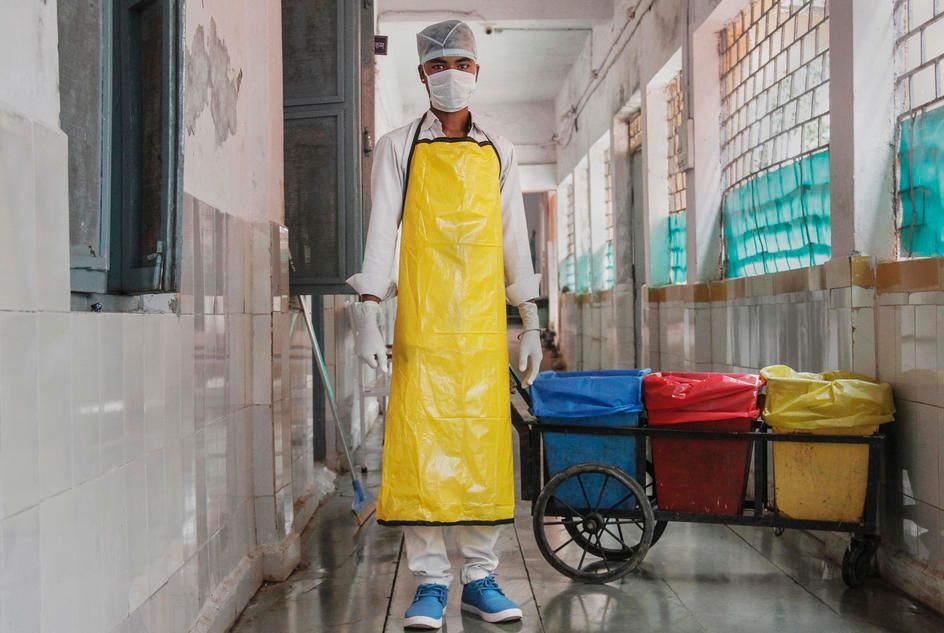
A swachhata drive of this scale touches every part of a hospital, from wards and toilets to records rooms and outdoor spaces. Hospital sanitation should visibly improve: cleaner premises, better-kept public areas, less clutter, and feedback systems that let visitors report problems quickly. Kayakalp activities succeed when the changes are still visible weeks later, which is why institutions were pressed to document their work for others to follow.
Public grievance handling was part of the same picture: with nearly all pending appeals resolved, institutions were urged to keep digital redressal and feedback systems running so complaints do not pile up again. The review covered 336 Central health institutions, and the one-day Kayakalp activities on 27 October 2026 are the next fixed point in a campaign running until 31 October.