AI in healthcare: M42 chief maps genomic future
M42's chief executive sets out a bold vision of AI in healthcare driven by genomics and prevention, from Med42 to the Emirati Genome Programme.
by Trends DeskOctober 17, 20264 min read
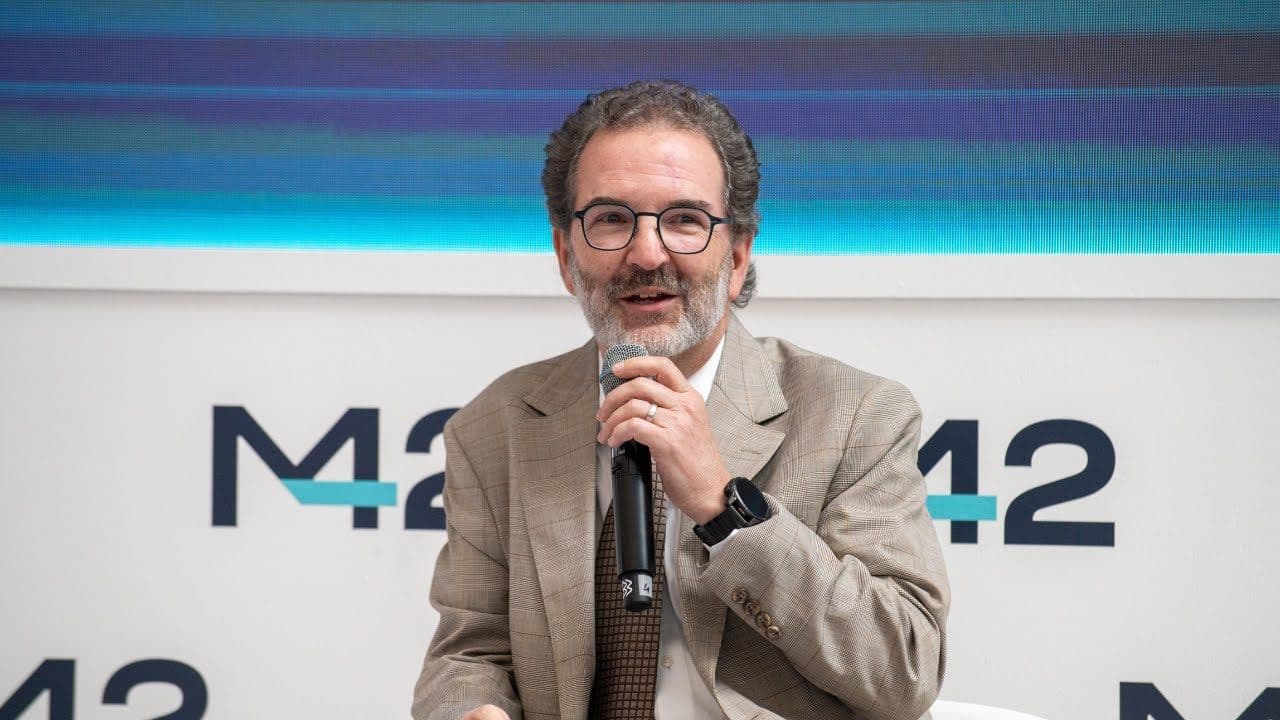
The vision of M42's chief executive for AI and genomics as twin engines of future healthcare is in the spotlight this week following a CNBC interview, with AI in healthcare at the centre of the discussion. In recent public appearances, the Abu Dhabi-based group's leadership has argued that data-powered prevention will reshape medicine. The remarks underline that the Gulf's biggest health-tech group treats AI in healthcare not as an add-on, but as the foundation of its operating model. Hasan Jasem Al Nowais, M42's managing director and group chief executive, has said lasting improvements in human longevity require a focus on three pillars: precision, preventive and predictive medicine. That shift, he said, requires artificial intelligence, genomic science and collaboration at every level of the health system. His comments capture the group's strategy: combining G42 Healthcare's medical and data-centric technologies with Mubadala Health's clinical services — a blueprint for AI in healthcare that is personalised, precise and population-scale. M42's open-source clinical language model Med42, developed with Cerebras on the Condor Galaxy 1 AI supercomputer, was among the first clinical large language models to pass the United States Medical Licensing Examination, scoring up to 72 per cent in zero-shot evaluation. Al Nowais said the model would accelerate global access to healthcare knowledge while staying rooted in ethics and user safety — the group's bet that AI in healthcare will first transform clinical decision-making. ## AI in healthcare: from reactive treatment to prevention At the UK's Longevity Forum, Al Nowais showed how AI in healthcare can look into the future. A 36-year-old woman with a family history of colon cancer underwent genetic testing, with results negative for the MLH1 mutation linked to Lynch syndrome, but positive for a BRCA1 mutation associated with hereditary breast and ovarian cancer, allowing early risk-reducing intervention. 'With AI, we're increasingly able to take vast amounts of data — from patient records, lifestyle factors and genetic information — and use it to identify high-risk individuals long before symptoms arise,' he said. He called genomics one of the most transformative developments in preventative medicine. ## M42 genomics and the Emirati Genome Programme Genomics sits at the heart of the strategy. M42 is applying AI and machine learning to one of the world's largest genomic datasets: more than 850,000 whole genomes sequenced. Through the Emirati Genome Programme, one of the world's most advanced national genomic databases with more than 800,000 samples sequenced, the group has integrated pharmacogenomic insights into electronic health records with Oracle Health, aiming to tell physicians at the point of prescribing which drugs best match a patient's genetic makeup. M42 genomics programmes also extend internationally: the company signed a 10-year contract with Botswana's government to roll out a national genomics programme, digitise health records and improve access to medicines — a national-scale test of what AI in healthcare can achieve by combining genomic, clinical and population data. ## Why AI in healthcare must be collaborative 'The future of healthcare is prevention, and the future of prevention is collaboration,' Al Nowais told the Longevity Forum, urging global leaders to pool genomics data and AI-driven care models. 'We literally cannot afford to work alone,' he said, whether the task is sharing genomics data, developing AI-driven models of care or reforming outdated systems. He argued the democratisation of care is vital for global health, insisting innovation must be accessible regardless of geography or economic status. For the M42 chief executive, the message is that preventive healthcare cannot be built in silos — it requires shared data, shared standards and shared ambition. ## Precision medicine moves into hospitals The precision medicine ambition is already visible in M42's clinical operations. Its AI-powered tuberculosis screening programme, AIRIS-TB, conducts around 2,000 chest X-ray examinations daily — ten times traditional capacity — and has been validated on more than one million chest X-rays with zero false negatives. Through Diaverum, its dialysis network, M42 has built an AI model that predicts vascular access thrombosis episodes in haemodialysis patients up to a week in advance. In November 2025, M42 partnered with Oracle Health to unify patient records across the UAE. Together, they illustrate a simple thesis: AI in healthcare works best when embedded in real clinical workflows — and the future of preventive healthcare will be measured in patient outcomes, not algorithms.